
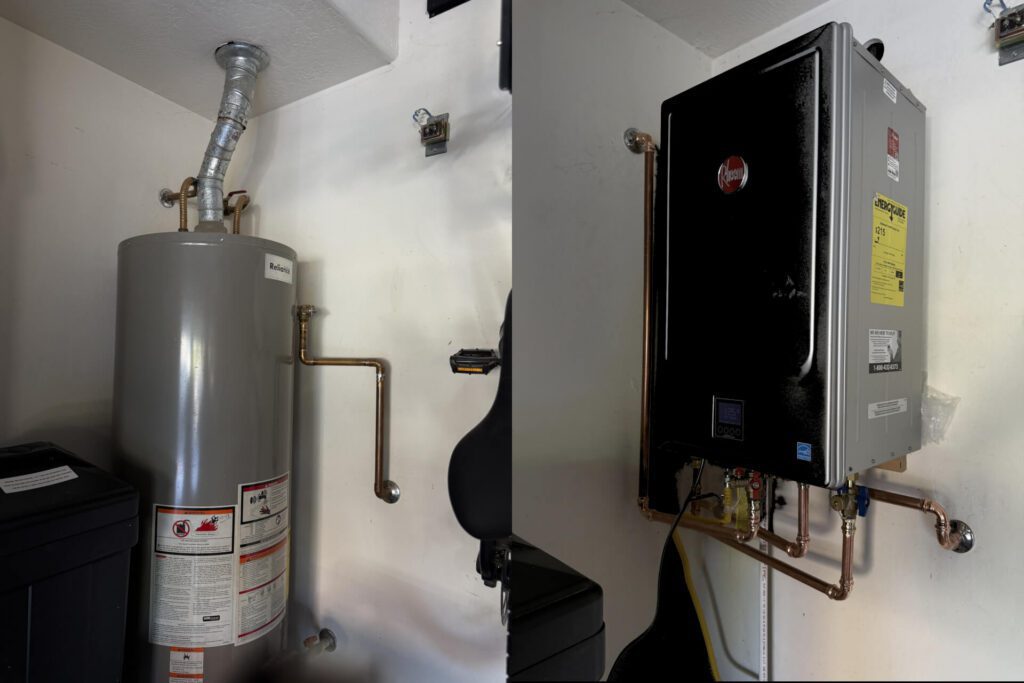
Choosing between tank vs tankless water heaters comes down to more than the upfront cost. In Phoenix, hard water, energy use, and your household’s hot water demand all play a role in which system delivers the best long-term value.
Quick Comparison: Tank vs Tankless Water Heaters
- Tank Water Heater: Stores 30–80 gallons of hot water in a storage tank that’s continuously heated and ready to use.
- Tankless Water Heater: Heats water on demand as it flows through the unit, so there’s no storage tank to keep hot water in reserve.
- Best Choice: A tank water heater is typically the more affordable option upfront. However, a tankless system often provides better long-term value through greater efficiency and a longer lifespan.
Target Plumbing has installed and serviced both tank and tankless water heaters throughout Phoenix and the surrounding Valley for the past decade. Our team has experienced firsthand how each system performs in Arizona’s hard water conditions. Here’s what to know about tankless vs tank water heaters.
How Tank and Tankless Water Heaters Work
Water heater tanks vs tankless systems differ in how they heat water. Traditional tank systems keep hot water stored and ready to use, while tankless units heat water only when you turn on a faucet.
How a Tank Water Heater Works
A tank water heater stores 30–80 gallons of water and keeps it heated to around 120°F, though temperatures may vary. Most models use natural gas or electricity, with gas units generally recovering hot water faster.
Because the water stays heated around the clock, tank systems experience standby heat loss. This means they use energy even when no hot water is being used. Regular water heater repairs help improve efficiency and reduce sediment buildup.
How a Tankless Water Heater Works
A tankless water heater heats water only when someone opens a hot water tap. Water passes through a gas burner or electric heating element, providing hot water on demand without a storage tank.
Whole-home gas units typically require 150,000–200,000 BTUs, so some Phoenix homes may need a gas line upgrade. Tankless systems are also sized by gallons per minute (GPM) to ensure they can meet your household’s peak hot water demand.
The Hard Water Factor Unique to Phoenix
Phoenix’s hard water can cause mineral scale to build up inside any water heater. In tank systems, sediment collects at the bottom of the tank, while tankless systems develop scale inside the heat exchanger.
Routine flushing for tank water heaters and periodic descaling for tankless units help maintain efficiency and extend the life of the system. Depending on the water quality, homeowners may opt for water treatments and softeners.
What Each System Costs in Phoenix — Upfront and Over Time
When comparing tank vs tankless water heaters, the biggest difference is cost. Tank water heaters are less expensive to install, while tankless systems cost more upfront but can reduce energy use and last significantly longer.
Tank Water Heater Costs
A standard 40–50 gallon gas tank water heater typically costs $700–$1,200, while comparable electric models range from $600–$1,000. A straightforward replacement generally costs $700–$1,500, although code upgrades or plumbing modifications can increase the total.
Because they keep water heated continuously, tank water heaters typically cost more to operate than tankless models. With regular maintenance, most last 10–15 years.
Tankless Water Heater Costs
A whole-home gas tankless water heater typically costs $1,000–$2,000, with installation in Phoenix ranging from $1,200–$2,500+. Costs increase if the property requires a gas line upgrade, new venting, or electrical work.
Although tankless water heaters vs tank water heaters cost more upfront, the U.S. Department of Energy reports they can reduce gas use by about one-third compared to conventional storage water heaters. Actual savings depend on household hot water use, with the greatest savings occurring at about 50 gallons per day. With annual descaling, many tankless systems last 20+ years.
Pros and Cons for Phoenix Homeowners — Side-by-Side
Both systems have advantages depending on your budget, home, and long-term plans. Here’s a quick look at the pros and cons of tankless vs tank water heaters for Phoenix homeowners.
Tank Water Heaters
| Pros | Cons |
|---|---|
| Lower upfront purchase and installation cost | Uses energy to keep water heated between uses |
| Simple replacement for most existing tank systems | Shorter lifespan than most tankless units |
| Can operate without a water softener | Can run out of hot water during heavy demand |
| Good option for homes without natural gas | Requires more floor space |
Tankless Water Heaters
| Pros | Cons |
|---|---|
| Lower energy use than traditional tank systems | Higher upfront and installation costs |
| Can last 20+ years with proper maintenance | May require a gas line or venting upgrades |
| Provides hot water on demand | Requires regular descaling in Phoenix’s hard water |
| Compact, wall-mounted design | Proper sizing is essential for high-demand households |
Which Type Is Right for Your Situation?
| Choose a Tank Water Heater If… | Choose a Tankless Water Heater If… |
|---|---|
| Your budget is under about $2,000 installed. | You plan to stay in your home for 10+ years. |
| Your home doesn’t have a natural gas line. | Your home has—or can accommodate—the required gas service. |
| You need a fast, straightforward replacement. | Your household regularly uses a lot of hot water. |
| It’s a rental property or long-term efficiency isn’t the priority. | You’re willing to keep up with annual descaling and water treatment if needed. |
For older Phoenix homes considering a tankless water heater, have a plumber inspect the piping before making the purchase. This helps ensure pipes can support the higher BTU demand.
Common Mistakes Phoenix Homeowners Make When Choosing a Water Heater
Choosing between tankless water heaters vs tank systems is about more than the price. These are some of the most common mistakes our plumbers see in Phoenix—and how to avoid them:
Skipping the Water Softener Assessment
Phoenix’s hard water can cause mineral scale to build up quickly inside any water heater, especially tankless models. Before investing in a new system, have your water hardness tested and ask whether a whole-home water softener is recommended to help reduce scale buildup, improve efficiency, and support long-term performance.
Undersizing the Unit for the Home’s Demand
A tankless water heater that isn’t properly sized may struggle to keep up when multiple fixtures are running at the same time. Instead of selecting a unit based on the number of bathrooms or bedrooms, have a licensed plumber calculate your household’s peak hot water demand. That way, they can recommend the right flow rate or tank capacity.
Ignoring the Gas Line and Venting Requirements
Many whole-home gas tankless water heaters require larger gas lines or venting upgrades than an older home already has. Identifying these requirements before installation helps prevent unexpected costs and ensures the new system is installed safely and according to manufacturer specifications.
FAQs — Tank vs. Tankless Water Heaters
How long does a tankless water heater last compared to a tank?
When comparing water heaters tankless vs tank, tankless systems typically last 20+ years, while tank water heaters generally last 10–15 years with proper maintenance.
Is a tankless water heater worth it in Phoenix?
For many homeowners, yes. Tankless systems cost more upfront but can lower energy use, provide endless hot water, and last significantly longer than tank models.
What size tankless water heater do I need for a 3-bedroom Phoenix home?
The right size depends on your home’s peak hot water demand, not just the number of bathrooms. A plumber should calculate the required flow rate before installation.
Do tankless water heaters work with hard water?
Yes, but Phoenix’s hard water can cause mineral scale buildup. Annual descaling and a water softener can help reduce buildup and keep your system running smoothly.
How much does it cost to switch from a tank water heater to a tankless system in Phoenix?
Most homeowners spend $2,000–$4,500+, depending on the unit and whether gas line, venting, or electrical upgrades are required.
Can hard water cause low water pressure?
Yes. Over time, mineral scale from hard water can build up inside your water heater, restricting water flow and reducing hot water pressure. This is more common in tankless water heaters but can also occur in traditional tank models.